

Our mobility and frailty care at home can help your loved ones experience a greater sense of independence. Our compassionate carers provide personalised support that is tailored to their unique needs.
MOBILITY AND FRAILTY CARE
What is mobility and frailty care?
Mobility and frailty care is a type of assistance that focuses on helping individuals who have limited mobility or are experiencing frailty due to ageing, illness or injury. The main objective of this care is to enhance their independence and quality of life by providing support with tasks such as walking, transferring between positions, and navigating the home safely.
Carers can also offer assistance with exercises to improve mobility and strength, as well as provide emotional support and companionship. The ultimate goal is to help individuals maintain or improve their mobility, prevent falls and injuries, and promote overall wellbeing.
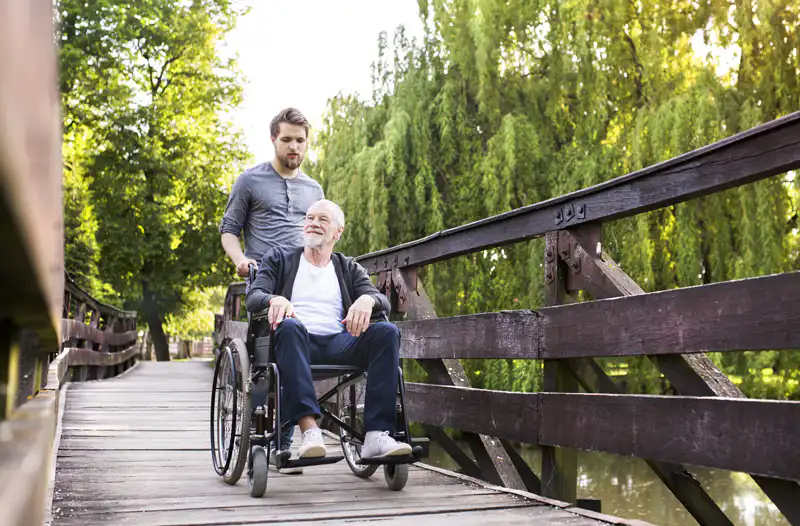
Enquire about hourly care

What are the benefits of receiving mobility and frailty care at home?
Mobility and frailty care at home offer tailored support for your loved one’s unique needs, allowing them to maintain their independence and feel a sense of comfort in familiar surroundings. Some of the other benefits include:
- Enhanced independence: Carers assist with mobility, transfers, and daily tasks, empowering your loved one to maintain autonomy
- Comfortable environment: Being at home promotes emotional wellbeing and reduces stress associated with unfamiliar settings
- Personalised attention: Care plans are customised to individual preferences and requirements, providing personalised care and support
- Safety and monitoring: Carers provide round-the-clock assistance, ensuring immediate help in emergencies and peace of mind for family members
- Quality of life: By receiving care at home, individuals can enjoy a higher quality of life with dignity and respect, surrounded by loved ones and familiar comforts
FAQ’s
Get all the information you need
Our mobility and frailty care service provides tailored assistance to individuals with limited mobility or frailty, including tasks like transferring, walking, and daily activities.
Beyond physical support, our carers offer companionship, emotional reassurance, and coordination with healthcare professionals for holistic care.
With a focus on preserving dignity and promoting independence, we strive to improve the quality of life for our clients in the familiar environment of their own homes. In fact, our compassionate team is there to provide safety, comfort, and personalised attention every step of the way.
Mobility and frailty live-in care may be a necessary service for individuals facing various situations, including ageing-related frailty, post-operative recovery, or managing chronic illnesses. It’s particularly beneficial for those with limited mobility due to conditions like arthritis, Parkinson’s disease, or stroke. Those experiencing cognitive decline, such as dementia or Alzheimer’s disease, may also benefit from this type of care.
Aside from illnesses, individuals recovering from injuries or surgeries may also require temporary assistance with mobility and daily activities. In fact, our frailty care becomes essential when individuals start to struggle with tasks like getting in and out of bed, bathing, or navigating the home independently.
We believe that the right carer not only provides practical assistance but also brings companionship and emotional support to your loved one. That’s why our assessment process goes beyond just the surface-level needs and preferences. We take into account their personality, interests, and lifestyle, guaranteeing that the carer we match them with is a compatible and nurturing companion. Our goal is to provide the best possible care for your loved one, and we believe that the right caregiver is an essential part of that equation.
The duration of mobility care services can vary depending on individual needs and circumstances. In some cases, individuals may require short-term assistance during recovery from surgery or injury, while others may need ongoing support due to chronic conditions or age-related mobility issues. The goal of these services is to improve the quality of life for individuals who need assistance with mobility, while also promoting independence and autonomy.
No care service can guarantee that a fall will never happen, but having the right support can help reduce everyday risks.
Our carers can assist your loved one when moving around their home, getting in and out of bed or chairs and completing daily activities. They can also follow any relevant guidance from healthcare professionals and support the safe use of mobility equipment where this forms part of the care plan.
Yes, where walking assistance or transfers form part of the assessed care plan, our trained carers can provide the appropriate support. The exact assistance will depend on your mobility, abilities and any professional guidance in place. We assess each person’s needs before care begins so that both the client and carer are clear about the support required.
Mobility care focuses particularly on helping someone move around safely and maintain their physical independence. This might include assistance with walking, standing, sitting or transferring between different positions.
Personal care focuses on everyday personal routines such as washing, dressing, grooming and toileting.
In practice, the two often overlap. Someone with reduced mobility may need help with both moving safely and completing personal care tasks. A personalised care plan can bring this support together so that you or your loved one receives care that reflects their individual needs.
COSTS
How much does mobility and frailty care cost?
Choosing us as your mobility and frailty care provider offers a budget-friendly alternative to full-time residential nursing homes, designed to meet the unique needs of your loved one.
Our fees include everything from the dedicated carer’s expenses to care management and oversight by a dedicated care manager. Starting at £1,650 per week, our mobility and frailty care services offer great value. For exact cost estimates and personalised care plans, reach out to our team directly on 01494 917344.
ABOUT US
Why choose Ashridge Home Care?

The Ashridge Team
We have been rated as Outstanding in the Caring Category by the Care Quality Commission (CQC). With an overall rating of Good in all other categories for being safe, effective, well-led and responsive to people’s needs.
Whether you need a lot of support or just a little looking after, we will provide flexible, cost-effective, tailored care to suit your needs.
At Ashridge Home Care, our commitment to excellence extends beyond ratings. We pride ourselves on promoting meaningful connections with our clients and understanding their unique preferences and requirements.
We not only focus on physical wellbeing, but also emotional and social support, ensuring a holistic and fulfilling experience.
Rest assured, your loved one’s comfort and satisfaction are our utmost priorities, driving us to continuously adapt and improve our services.
We guarantee to find a carer that you are happy with – if you are not happy we will replace your carer with someone else more suited.
HOW IT WORKS
What is the process for arranging mobility and frailty home care for a loved one?
Arranging round-the-clock care with Ashridge Home Care is a seamless process tailored to your needs. Connect with our team by calling 01494 917344 today or complete our contact form.
Once we have a better understanding of your loved one’s requirements, we’ll designate a dedicated care manager for a comprehensive assessment and personalised care plan creation. Throughout, we’ll address any queries or worries, making certain that the care perfectly suits your loved one’s needs and preferences.
Enquire about hourly care
Mobility Care: Essential Facts
How reduced mobility and frailty can affect daily life
Changes in mobility often occur gradually, so they aren’t always easy to spot. You may notice that getting out of a chair takes just a bit longer, or that a single wobble on the stairs unknowingly starts eating away at your confidence.
When we begin to question our own mobility, we can feel deflated and start avoiding doing specific things that are a struggle. You may stop going out; your diet might worsen because you no longer cook homemade meals; and you might get more aches as you spend your time mainly sitting or in bed.
This can cause a vicious cycle that reduces your mobility even further and causes emotional strain, which in turn makes you move less. Research supports this view. A study by the English Longitudinal Study of Ageing found that 23% of people with mobility impairment reported depressive symptoms compared with 7% of those without one.
Reduced mobility affects not just your ability to get around but also your sense of social connection and emotional well-being. The more isolated you become, the more your wellbeing suffers.
Help to stay independent for as long as possible
Good mobility and frailty care is not about doing everything for someone. It is about understanding where support is needed and, at the forefront of what we do, encouraging independence wherever it is safe and comfortable.
For one person, that might mean having a steadying hand as they move around the home. Someone else may need help getting dressed. All the while, people may still be able to complete personal care routines, such as showering, on their own.
Care in later life is not the same for everyone, and our carers take the time to understand how you or your loved one lives. Mobility care offers that extra bit of practical help while ensuring control and agency stay with you. This personalised approach benefits anyone who has experienced a change in their mobility. Keeping familiar routines maintains confidence, dignity and a sense of control. Daily movement also helps people remain socially engaged and maintains their confidence.
With the right professional care and input from healthcare professionals, many people can become more active and continue to live safely and comfortably in their own homes even with an ongoing disability. The right care also supports better overall health by improving blood circulation and reducing chronic conditions.
Regaining confidence after illness, injury or a fall
A period of illness, an injury, disability, a hospital stay or a fall can sometimes have a significant effect on confidence. Yet, around one in three people aged 65 and over experience a fall each year. For those aged 80 and over, the figure rises to around half. A fall can affect more than your physical health too, sometimes causing a loss of confidence and making you more hesitant to move independently. For that reason fall prevention strategies are crucial for people with movement difficulties.
Having professional help at home makes the transition after such an event feel more manageable:
- Reassurance when moving about at home
- Assistance outside the home when going to hospital appointments or social events
- Practical assistance with everyday activities
- Help with exercises and movement to become more active and speed up recovery
You or your family member might need this extra help only for a short period, but, if needed, ongoing care may provide confidence and stability to continue living safely and comfortably at home.
Using mobility aids with greater confidence
Mobility aids and adaptations can make a real difference to someone’s independence, but getting used to them can sometimes take time. A walking frame, wheelchair, mobility scooter etc. may feel unfamiliar at first, particularly after a significant change in mobility. Where an aid is only required temporarily it is possible to, for instance, borrow walking sticks from the NHS or borrow wheelchairs from the Red Cross on a weekly basis. You will need a referral for an NHS wheelchair assessment but you may self-refer to a wheelchair service in some areas.
Our professional, trained carers can assist you or your loved one in using aids or home modifications as recommended for everyday routines. Home modifications can improve safety and access for those with mobility challenges and help people as they move around their home. Another example of the support our carers provide is helping people feel more confident using aids such as walking frames.
Where an occupational therapist, physiotherapist or another healthcare professional has provided specific guidance, our carers can follow this as part of the agreed care plan. They can also help you or your loved one build familiar routines around equipment and adaptations such as grab rails, stairlifts and other products.
How live-in care can help someone with limited mobility
For someone with a reduced ability to move around, assistance is not always needed at the same time every day. You may need assistance getting ready in the morning, for instance, or moving around the house, preparing meals or settling comfortably later in the day; actions that don’t happen on schedule.
Live-in care provides a more continuous form of care because the carer lives in your home and becomes part of your normal daily routine. This can provide greater flexibility than short, scheduled care visits. There is less pressure to complete everyday tasks within a limited time, allowing days to move at a more natural pace.
Live-in care can also give family members peace of mind, especially when they are unable to be nearby every day. The carer is there to provide agreed assistance while still encouraging your loved one to remain involved and independent. At Ashridge Home Care we provide live-in care across the whole of Southern England.