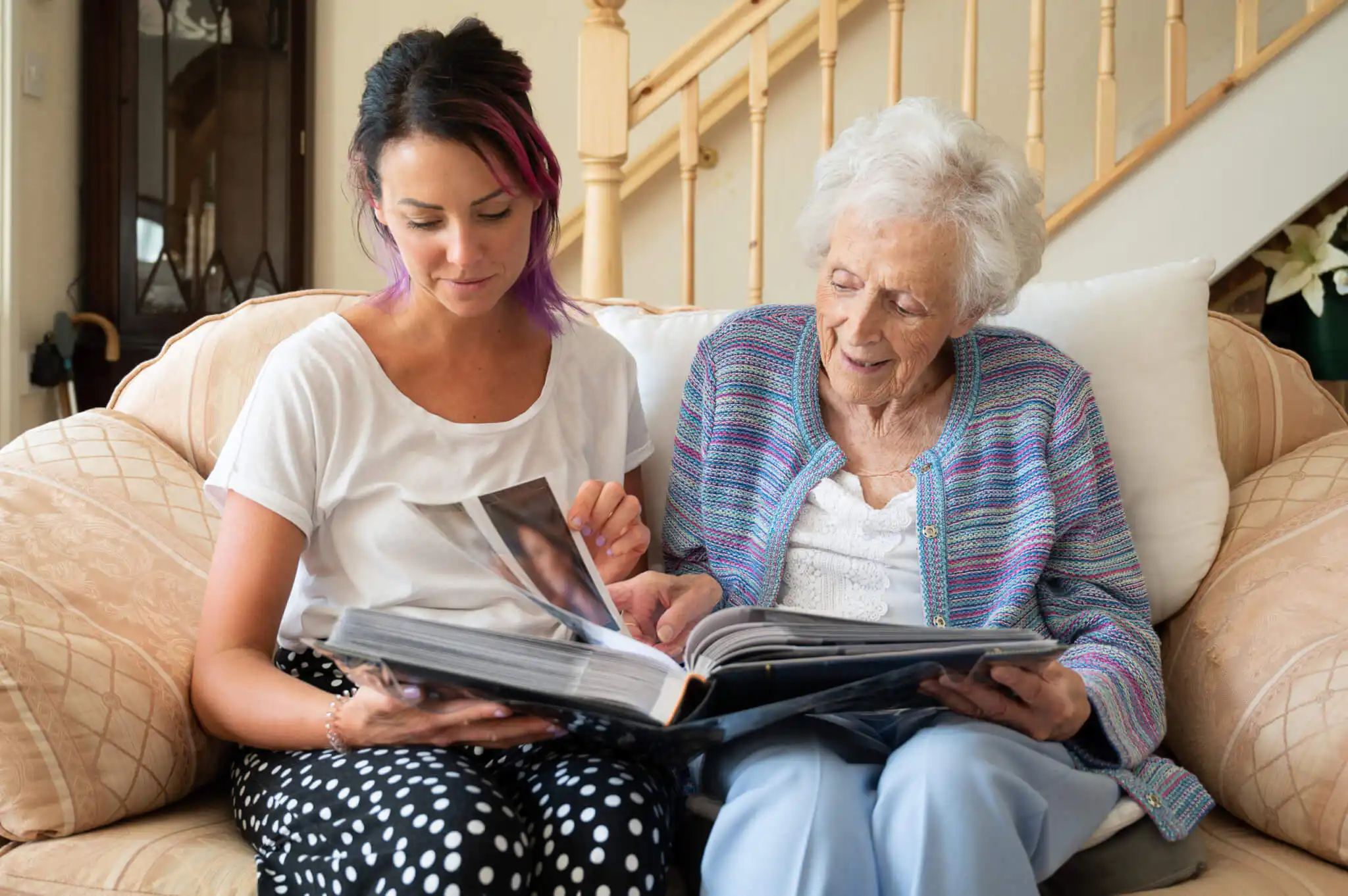


This week Ashridge Home Care is marking Dementia Action Week, organised annually by the Alzheimer’s Society and a much-needed awareness raising event. This year the Alzheimer’s Society is focusing on early diagnosis as 1 in 3 people in the UK living with Dementia are currently undiagnosed.
The Ashridge team is embracing the week with events for our carers, clients, and the wider community – from library information stands to fundraising bake sales. Our goal is simple: to show that a dementia diagnosis doesn’t have to mean leaving home. With the right support and understanding, most people can continue living independently in the place they love most.
Trust, respect, and meaningful dementia care
Our Community Partnership Manager Abbi recently caught up with Alex, one of our dedicated live-in carers. Alex has been a part of the team for four years and brings a wealth of experience to Ashridge, having spent eleven years as a professional carer and another seven as a volunteer.
For a long time, Alex supported a gentleman in Beaconsfield, and their bond was truly evident at the Memory Cafés hosted by Ashridge Home Care. A local Dementia Specialist, Sally Blackden, fondly recalls how he would come alive during our international quizzes. A seasoned world-traveller during his corporate career, he loved sharing stories from abroad and could still recall phrases in multiple languages; moments that clearly lit up his day.
Alex understood that a dementia diagnosis shouldn’t mean retreating from the world. Whether they were attending crafting sessions and VE Day celebrations at our Amersham office or soaking up the atmosphere at the Christmas light switch-on, Alex ensured his client remained a familiar face in the town. This level of community engagement is at the heart of what we do; it’s about ensuring our clients stay connected, active, and are supported to live well with dementia.
Caring for a loved one with dementia can feel overwhelming, but you don’t have to navigate it alone. If you’d like to chat about your situation or learn more about how our team can support your family, we’re here to help. Contact our team today.
Our values in practice: a conversation with Carer Alex
At Ashridge, our guiding principles or trust, respect, knowledge, and compassion, flow through every aspect of our dementia care.
We sat down with Alex to discuss what truly matters when supporting someone with dementia and what 18 years in the field have taught him about the heart of caring. While every individual journey is unique, these insights represent the core philosophy that ensures our clients don’t just receive support, they feel truly seen and valued.
Why is building trust important when supporting someone living with dementia?
Building trust is essential when we support someone living with dementia because it reduces fear and anxiety and creates a safe, comfortable environment where individuals feel “at home”, respected, and valued.
It ensures higher-quality care, encourages open communication, and helps maintain the person’s dignity and emotional wellbeing as their abilities change. When trust exists, individuals are more likely to share their needs, discomfort, pain, preferences, etc. This means the care is tailored to their needs and not a rigid, boring routine that can sometimes make individuals feel like a “subject of care”.
An individual who trusts his or her carer will more easily accept help with personal care and hygiene, mobility, moving and handling, medication, etc.
Ultimately, when we build trust with the individuals we look after, it improves wellbeing and offers emotional support. Key factors in building trust are consistency, communication, patience, and being able and ready to adapt to the individual’s personal needs.
How do you show respect for a client’s independence and choices?
Showing respect for a client’s independence and choices means adopting a person-centred approach that prioritises the individual’s preferences and autonomy.
To achieve this, we need to develop strategies such as:
Actively involving clients in decisions by regularly seeking consent before performing care tasks or moving personal items, so individuals feel they have control over their surroundings and routines.
Offering choices, even small ones. Promoting independence, being patient and respecting their pace, using effective and respectful communication, active listening, avoiding assumptions, maintaining dignity, respecting privacy, personal space, and personal values.
What have clients taught you about living well with dementia?
A diagnosis is not a declaration that life is over, but rather a shift to new ways of living, engaging, and finding purpose.
Living in the moment, seizing the day, and finding joy in daily pleasures like music, a warm cup of tea, or a smile.
They are still themselves. Individuals retain their personality, desires, and ability to contribute. Humour helps. They can still do, enjoy, and achieve many things, and we must focus on what they can do.
No rush. Take time. Give hope.
How do you help families feel reassured and supported?
Dementia can be a very difficult and challenging situation for the individual’s family as well, and families need help and reassurance too.
Ways to help families include offering consistent and honest updates on the individual’s physical and emotional wellbeing, including both good days and challenging ones. Making ourselves available for questions and listening to family concerns without judgement helps them feel that their loved one is safe.
Sharing positive moments with families, such as a completed activity or a moment of joy, helps them focus on their loved one rather than only on the disease.
It is also important to help families understand that challenging behaviours are often the result of unmet needs, such as pain, fear, or discomfort, rather than simply “dementia”.
Reassuring family members that they are doing a good job and that their continued presence is valuable is equally important. Providing empathetic support and professionalism helps families feel they are not alone or isolated and reassures them that their loved one is safe.
Why is patience and listening such an important part of dementia care?
Caring for someone with dementia is about more than just medical support — it takes patience, understanding, and flexibility.
Many individuals experience confusion, memory loss, and difficulty with daily tasks. A calm and patient approach can make a significant difference to their wellbeing. As dementia progresses, verbal communication can become more difficult, making patience and listening key factors in understanding needs such as pain, fear, or discomfort that the individual can no longer easily express.
This helps to reduce anxiety and distress, build trust, and maintain the individual’s dignity. It improves emotional wellbeing, supports independence and safety, and enhances the effectiveness of care.
For more tips on communicating with someone living with dementia, view our blog.
How do familiar routines and surroundings help build confidence and trust?
Because dementia affects, among other things, short-term memory, individuals often rely on long-term memories and routine behaviours to understand their environment.
A consistent daily routine, such as having meals, medication, and waking times at the same time each day, creates a predictable world and reduces anxiety and confusion. Following a familiar and stable routine helps individuals feel in control, which increases their confidence and builds trust.
Especially when individuals continue living in their own home, they feel safe and reassured that they are still in control. It is their life, their memories, their sense of self — it is their home.
What does respectful Dementia care look like to you?
Seeing the individual, not the disease. Respecting the individual’s dignity, preferences, feelings, and valuing their history.
Avoid correcting mistakes unnecessarily and instead listen to the meaning behind what the individual is trying to communicate. If the individual is upset, they may be trying to express a need such as pain, discomfort, or needing to use the bathroom.
Speak to the individual as an adult, using clear and simple language, while allowing time for a response. Support independence, offer choices, respect privacy, and never discuss them in front of them as though they are not there.
What message would you share during Dementia Awareness Week?
Learn the early signs, don’t wait, and act on an early diagnosis. Every step matters, and even small actions can make a big difference. Their home is their safe haven and often the best place for your loved ones to remain in their home safely.
What events are Ashridge Home Care hosting this Dementia Action Week?
To support Dementia Action Week and raise awareness, we have several events planned across the community. Whether you are concerned about someone’s memory or just want to support a great cause, we’d love to see you there:
- Wednesday (Daytime): Princes Risborough Library Our team will be on-site to answer questions and provide guidance on dementia symptoms and support
- Wednesday (Evening): “Top Tips” Session at Ashridge HQ, Amersham. Join us for an informative evening session.
- Thursday (10am – 12pm): Charity Bake Sale in Speen. Our wonderful Memory Café volunteers have been busy baking! Come enjoy some cake and help us raise vital funds for the Alzheimer’s Society.
Get in touch If you are concerned about a loved one or need professional advice, please call our Care Management Team on 01494 917344. We are here to listen and help.