

According to Age UK , 1 in 5 people aged between 50 and 64 in the UK provide care to their loved ones, or to another elderly relative. The Age UK data reveals that around a third of the 6.5 million people who are family caregivers in the UK are aged 65 and over and the caregivers aged 75 and over has increased by over 30% within the last two decades.
Recent Statistics also tell us that by 2039 there will be over 74 million people in the UK and over 18% of those people will be over 65. There are now 12.4 million people aged 65 or over in the UK and the Office for National Statistics (ONS) has predicted the UK population aged 85 and over will nearly double from 1.75 million (2.5% of the population) in mid-2024 to 3.6 million (4.9% of the population) by mid-2049. There’s no doubt all this will lead to a substantial increase in demand for care.
What are the alternatives to care homes?
Ashridge Home Care offers personalised alternatives to care homes, including live-in care for round-the-clock support, hourly care for flexible assistance, and companionship care for social interaction.
Respite care provides temporary relief to primary carers, while specialised home care services cater to those with dementia, serious illnesses, or undergoing rehabilitation.
Each home care service is designed to provide comfort, independence, and dignity within the familiar surroundings of the home.
With a focus on tailored support and companionship, Ashridge Home Care empowers individuals to live fulfilling lives while receiving the assistance they need.
Families are leaving care planning later and later
The majority of people don’t plan for their later life care so when illness or disability strikes an elderly relative their families often don’t know who to turn to for help and reliable information about care choices.
They find themselves in a crisis situation without the knowledge to make an informed decision. This can result in a rushed decision and the assumption that a care home or nursing home is the only viable choice.
The importance of finding the right care for elderly people
As elderly loved ones and parents reach their later years, it’s often the responsibility of their family members to care for them. Although loved deeply, further pressures of distance and time constraints can make it difficult for relatives to provide the necessary level of support that older adults need to live safely in their own home. At the same time, family members become aware of their concerns about losing their independence as they begin to rely on others more and more for support with their daily chores and personal care.
These feelings of dependency often lead to anxiety for all concerned. Something important to remember is that caring for loved ones shouldn’t be a burden or responsibility to bear alone. Thankfully, home care support is available. In addition to siblings and other family members, there are experts, professionals, resources, and loads of information to help you in careful planning for later life.
Explaining to your loved one that they need a carer is never an easy conversation to have, but you just need to remember that they are likely very aware of their current condition.
How the desire for independence affects decision-making
A lot of what stops a person asking for help is pride and the need to feel independent. Therefore, ensure that you mention how much more independent they would feel if they could go about their day without feeling like their body is stopping them. That extra human assistance available via home care will go a long way because they’ll have more energy to put towards the better part of their day.
Avoid making assumptions about available care options
A residential care home is often the first thing that you might think of when you think about later life care because of the on-site care available. However, it is not the preferred option for many people. Most residential care homes operate in a ‘one size fits all’ routine where staff help all clients get dressed and ready for the day at the same time, and they are all dressed for bed at the same time, eat at the same time, and are moved into the same communal areas at the same time.
Of course, staff do their best to provide the best possible care, but it is well known that carers in a residential care home struggle to spend much quality time with their clients because of the limits placed on the time they have available to provide support services. But care homes are not the only option – or even the most cost effective option – so it’s worth exploring alternatives.
What is live-in care?
Live-in home care offers personalised, one-to-one support, where individuals can stay in the comfort and familiarity of their own home. A dedicated care manager works with the family to understand their needs and personality, providing a personalised care plan that promotes independence, dignity, and overall well-being. It’s a flexible and compassionate care option that often reduces loneliness, improves quality of life, and brings peace of mind to families, making it a trusted alternative to residential care even for complex needs.
What are the benefits of live-in care?
Staying at home with a professional carer will result in better health and well-being, dignity, independence and enjoyment of life.
Nearly three quarters of us want to stay in our own homes as we get older – and we definitely DON’T want to move into residential care. With shocking news stories commonplace, a staggering 97 percent of people do not want to go into a care home if they become ill or less able to cope. ( No Place Like Home Report” commissioned by the Live in care hub )
Outstanding one-to-one care at home
It is very understandable that so many people want to stay in their homes, with their pets and partners and everything that is familiar to them so, naturally, would like a better alternative to residential care. Luckily, there is a life-enhancing alternative to care homes and that is live-in care, which provides round the clock support. Combined with any home adaptations required to improve safety for seniors aging at home it is probably one of the best alternatives to care homes. Live-in care is a fantastic alternative to residential care where your loved one is able to remain in the comfort of their own home – whilst receiving professional care provided by a live-in carer – even when there are complex needs.
Cost effective
Despite a common misconception that live-in care is much more expensive compared to moving in to a residential care home, in many instances it is an affordable alternative and can even be less expensive when a couple is being cared for at home. With live-in care, the level of care is completely tailored to the needs of the client because the care is 1-to-1. Full-time carers working in live-in care are able to completely excel in their duties, offering the kind of care they were trained to provide.
Better quality of life
The Live-in Care Hub’s quality of life study suggests that a third of those in residential care and over half in nursing homes never leave their home, compared with just one in five (21%) with live-in support. The study also highlights that one in six (15.2%) of people in nursing homes say they have no control over their daily life compared to only 3% of those people interviewed who have live-in carers.
Bridget Warr, Former Chief Executive of the UK Homecare Association says :“Staying safe and well at home is the best solution for people, their families and communities. Live-in homecare has an essential role working with the health service. It can make a real difference to avoiding hospital admission, which is traumatic for anyone, but particularly for people with dementia or advancing frailty.”
The social care system is in crisis.
Care and Nursing Homes, despite the valiant efforts of their heroic staff, are not able to give their residents everything they need for a safe, dignified and happy last few months or years of life.
What does give people the care, safety, dignity and the value for money that they want and need? The Live-in Care Hub’s Better at Home report shows that there really is “Nowhere Better Than Home“. Research concludes that the UK’s institutionalised approach to elderly care is broken, despite the very best efforts of care home staff. Yet better alternatives to care homes – in the form of live-in care options – are readily available.
If you, or a loved one, are facing the emotional decision of finding the right elderly care, it is important to know that there is support out there for you when you need to arrange care. Whether you are looking for hourly visiting care or 24-hour live-in care – or something in-between – a care home is not the only option or even necessarily the best option.
Reduce loneliness
A live-in carer is a different type of companion. The main focus is on providing the best company and support that you could ask for, as well as attention and round-the-clock care. It’s really exceptional when you think about it – by the very nature of what they do, they are able to provide premium care in a way that a carer in a residential care home simply never could.
This portion of your life isn’t one which has to be lonely and sad and a live-in carer might just be the tonic that loneliness needs. It helps to shake off the melancholy and apathy while reminding you that while you aren’t necessarily at a physical peak anymore, you don’t have to be alone and brooding.
Supporting the NHS
The live-in home care option is not only life-enhancing for the person being cared for, it can also help families and the health service. It offers a very efficient and effective solution to one of the NHS’s major issues, that of hospital ‘bed blocking’
The strain on our NHS is showing, with overworked staff and overcrowded wards. It’s time that we start to work collaboratively to tackle this national problem. No one wants to be stuck in hospital when they are well enough to return home and be supported by a home care service.
Happiness is NOT a luxury – everyone needs it!
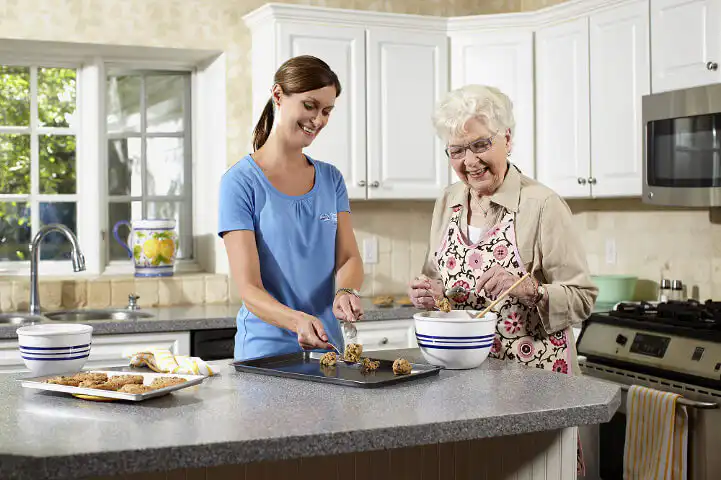
Live-in carers help clients enjoy things in life that bring happiness: seeing friends, social engagement, baking, gardening or reading a great book. For many of us, caring is simply part of family life. We may have grown up with a parent, sibling or grandparent who needed care, or maybe as a parent we can see how caring is shaping our family life and daily routine. By helping an elderly loved one live with greater independence you’re allowing them to live confidently, in the home they love as well as letting them retain their current lifestyle and access to absolutely all of their belongs and treasured memories. Whether that’s by making changes to their lifestyle, home or bringing in outside support, you can’t put a price on the freedom to live on your own terms.
Peace of mind for loved ones
Live-in care is a long established but lesser known alternative to care homes – whether residential or nursing homes – that substantially extends the care choice available to the individual. It allows someone with high levels of need – even those requiring complex care – to remain in their own home and community and lead a good quality life in familiar surroundings.
“I expect live-in care to continue to grow in popularity and to become the high quality first care choice of many people” Dr. Glen Mason, Director of People, Communities and Local Government, Department of Health.
Knowing that you require care or your loved one requires care can be very difficult, but knowing there is an option for care that doesn’t involve the upheaval and distress associated moving to a care home is a blessing for many families. Subject to a care assessment, live-in care can be a better option for later life, personalised care and it is important to know that it is a viable and affordable option.
Exploring alternatives to a care home: Other options
Moving in with family
Moving in with family (such as adult children) can be a comforting choice for many elderly people, as it offers emotional support in an environment they’re comfortable in. It can also strengthen family bonds, enabling loved ones to connect, share responsibilities, and give them a chance to stay close to those who matter most. However, it may require adjustments to routines and living arrangements (i.e., home modifications). Family members may also struggle to meet their loved one’s care needs, particularly for those living with progressive illnesses or conditions. Day care centres provide social activities and care during daytime for seniors. But if family care becomes too overwhelming, respite care can provide a short-term break for families with care responsibilities.
Retirement villages
Retirement villages are purpose-built communities specifically designed for elderly people, where independent living is combined with access to support. Residents enjoy private, accessible accommodation alongside shared facilities, such as gyms, cafes, and social areas, helping promote an active and engaging lifestyle. Retirement villages often have on-site warden supervision and whilst they can provide access to onsite care, they can be costly and have limited spaces. Retirement village living is also not for everyone, as they can feel daunting. Elderly people may feel disconnected and isolated moving away from their home, family and friends.
Sheltered housing
Sheltered housing is designed for adults who want to live independently while having access to support – sometimes referred to as supported living. It’s usually made up of self-contained flats or bungalows inside a complex, with a scheme manager (also known as a warden) living on-site or close by. Residents benefit from 24-hour emergency alarm systems, shared communal spaces (like gardens or lounges), and social activities. Sometimes domiciliary care can also be arranged to provide daily assistance with specific tasks such as meal preparation. Sheltered housing balances independence and peace of mind, making it a suitable choice for those not ready for full-time care. However, the individual has to move away from a home they’re comfortable in, and accommodation costs can be expensive.